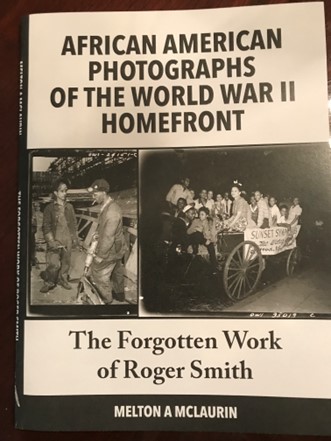
Available on Amazon, Barnes & Noble, and your local bookstore
For less than eighteen months in 1942 and 1943, a young African American photographer named Roger Smith was the sole photographer for the Negro Section of the segregated Office of War Information (OWI). From the agency’s office in Washington, D.C., he worked in a rigidly segregated city and in an equally segregated federal government civil service. Despite the handicaps under which he labored, in that brief time Smith created a remarkable photographic record of the African American home front in and around the nation’s capital. His photographs, many of them arresting candid shots, provide a vivid record of African Americans supporting and contributing to the war effort of a nation that deemed them inferior and continued to treat them as second-class citizens. While Smith himself, about whom we know little, slipped from the pages of history, his photographs remain to attest to both African American support for the war and to a people’s continued hope that the nation would someday redeem its promise of equality for all.
Melton McLaurin is professor emeritus of history at UNC Wilmington. He is the author of ten books and numerous articles on the American South and race relations. Among his best know works are Separate Pasts, Growing Up White in the Segregated South, winner of the Lillian Smith Award; Celia, A Slave , a 1992 New York Times notable book of the year; The Marines of Montford Point: America’s First Black Marines; and writer/director of the PBS documentary The Marines of Montford Point: Fighting for Freedom. He resides with his wife, Sandra, in Wilmington, NC.
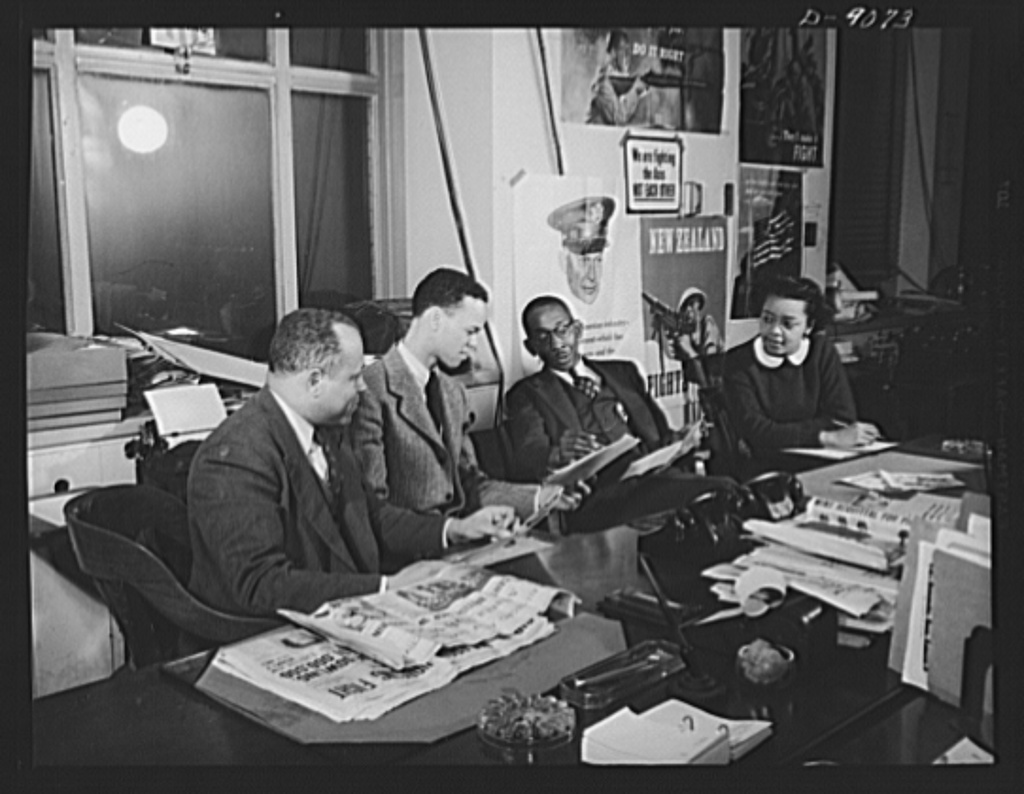
(This is the only know photograph of Roger Smith, second from left. He is shown working with Ted Poston, the director of the Negro Section of the Office of War Information on his left, and Poston’s, assistants William Clark and Harriette Easterlin. The photograph was taken by Alfred T. Palmer, a white photographer working for the Farm Security Administration.)
Introduction
For less than eighteen months in 1942 and 1943 a young African American photographer named Roger Smith worked for the Office of War Information (OWI). From the agency’s office in Washington, D. C. he worked in a rigidly segregated city and in an equally segregated federal government civil service. Despite the handicaps under which he labored, in that brief time span of less than two years Smith created a remarkable photographic record of the African American home front in the nation’s capitol and its surrounding area. His photographs, many of them arresting candid shots, provide a vivid record of African Americans supporting and contributing to the war effort of a nation that deemed them inferior and continued to treat them as second class citizens. While Smith himself, about whom we know little, slipped from the pages of history, his photographs remain to attest to both African American support for the war and to a peoples’ continued hope that the nation would someday redeem its promise of equality for all.
As a staff member of the of the Negro Press Section within in the segregated OWI, Smith worked under the supervision of Ted Poston, one of the nation’s most experienced, best known, and widely respected African American journalist. Poston began his career with the African American owned New York Amsterdam News, where he quickly established a record as a brilliant reporter. In 1936 he became one of the first black journalists to be hired by a white owned newspaper, The New York Post, where he continued to build a reputation as a respected journalist. In 1942 President Franklin Roosevelt appointed him director of the Negro Press Section of the OWI, and Poston also served as a member of Roosevelt’s informal Black Cabinet. Despite his accomplishments the rules of segregation that governed the society in which he lived and the agency for which he worked restrained Poston, just as they did Smith. And like Smith, Poston’s work for the OWI went largely unrecognized. The primary history of the OWI to date mentions neither the Negro Section nor Ted Poston.
While Poston gave Smith his assignments, during his time with the OWI Smith encountered any number of talented white photographers, many of whom would go on to exceptional careers, some to fame. In the exact time period Smith worked with the OWI, the Farm Security Administration (FSA), one of Roosevelt’s Depression era agencies, was merged with the OWI until it was eliminated at the end of 1943. The cadre of photographers in the FSA photographic unit headed by Roy Stryker had gained a national reputation presenting the American public with graphic images of the human suffering endured during the Depression, images that still loom large in the public recollection of that era. Among their ranks were Stryker, Walker Evans, Dorothea Lange, Ben Shahn, Jack Delano, Arthur Rothstein, and the African American photographer Gordon Parks. While the extent of Smith’s contact with such accomplished photographers is unknown he had some interaction with some of their number. In 1943 Alfred T. Palmer took the only surviving photograph of Smith, showing him as a slender young man seated next to Ted Poston in a Negro Unit staff meeting. After the demise of the FSA Palmer became one of the nation’s most famous photographers of the military.
As the Negro Section’s sole photographer, Smith produced the photographs the OWI sent to some 240 black owned newspapers located in every region of the country. Among the largest African American owned papers at the time were the Atlanta World, the nation’s only black owned daily, and the large weekly papers with circulations in the hundreds of thousands, including the Pittsburg Courier, the Chicago Defender, and the New York Amsterdam News, each enormously influential and each reaching numerous subscribers beyond their city. Papers with a more local circulation in cities such as Boston, Baltimore, Cleveland, Dallas, and Los Angles each reached an additional audience of tens of thousands. The Negro Section also sent its stories and photographs to the few black owned papers published in southern cities, including Nashville, Tennessee and Greensboro and Wilmington, North Carolina, all of which found a small local readership.
In June, 1942, Roosevelt created the OWI, a successor to earlier information agencies, with two separate divisions. One was tasked with addressing the domestic audience; the other was to address a foreign audience, primarily in Europe. Both divisions were tasked with a dual mission. The first was to be an official and trustworthy source for war information. The second was to convince the audience to give the war effort their full support, including the willingness to sacrifice for it. This latter task, especially in the OWI’s domestic operations, increasingly entailed the techniques of propaganda, causing a rift within the ranks between those who saw the agency as a purveyor of hard, factual news and those who saw it as a means to propagandize for the support of the war, and especially for the idealistic war aims set out in the Atlantic Charter drafted by Roosevelt and Winston Churchill in 1941.
The tensions resulting from the dual nature of the OWI’s mission were even more pronounced within the Negro Section. In carrying out their mission to convince the African American public to fully support the war effort, Smith and others of the Section’s staff faced a challenge their white counterparts did not. The racist segregationist policies which had evolved in the south after Reconstruction were fully embedded in federal law. Both the federal civil service and all branches of the military were segregated, the Marines even denying admission to blacks until 1942 when forced to do so by an executive order. In southern states legal codes of segregation governed almost every aspect of life. In the north, while African Americans enjoyed political rights, a bewildering array of ordinances and custom restricted their right to employment, residency, and public accommodations. In the United States Senate and House of Representatives powerful southern Democratic committee chairmen rebuffed and resented any federal action they deemed to be the slightest challenge to their segregated society. Jim Crow held the nation in what seemed an unbreakable vise.
The racial prejudice of the society within which it operated seriously impacted the work of the Negro Section. Its staff was tiny; Smith was its sole photographer. Southern congressmen resented its very existence, seeing it as a threat to segregation. In one of its few special efforts to explicitly propagandize the African American public, in 1943 the OWI produced and distributed 2.5 million copies of a seventy two page pamphlet entitled Negroes and the War. Like the Pittsburgh Courier’s Double V campaign, V for victory in the war and V for victory over segregation, the pamphlet was a response to a number of influential African American voices urging blacks not to support the war effort of a society that kept them as second class citizens. To direct the project the OWI hired Chandler Owen, a North Carolina native, major figure in the Harlem Renaissance and, after moving to Chicago, publisher and public relations expert. Lavishly illustrated with photographs, the pamphlet featured not the work of Smith, but the famous white photographer Eliot Elisofon. This exceptional effort to enlist the support of African Americans for the war effort enraged southern congressmen, who saw it as an assault upon segregation.
Within the Section itself, Smith faced the challenges of working in a segregated unit. He was rarely afforded the opportunity to photograph what were considered white subjects and instead given assignments thought to appeal to an African American audience. He had no control over developing the film he shot and felt his work was being sabotaged by white technicians in the developing labs. Smith labored under such restrictive conditions that African American photographers working with other federal agencies saw him as the prime example of a problem they wished to avoid. Despite these restrictions, the public, black and white, widely recognized Smith as the official African American photographer for the OWI and a national African American audience appreciated his work.
It was against this backdrop of working for a segregated agency of a segregated federal civil service in a segregated and profoundly racist society that Roger Smith sought to both inform the African American public about the war and to convince them to grant it their full support. Smith’s photographs encouraged African Americans to enlist in segregated military units, to buy war bonds to help finance the war, to train for and except positions in a segregated workforce that produced the weapons of war, to staff the segregated bureaucracies required to prosecute the war, to employ their educational and social institutions to promote the war. His work represented a huge request of a segregated and marginalized people. That they rallied to support and contribute to the American war effort reflects their hope that their sacrifice would gain them first class citizenship. This hope was expressed in the Double V campaign embraced by almost every African American civil rights organization and the publications that ran Smith’s photographs—Victory in the war, and Victory over segregation.
The topical arrangement of the photographs in this work was determined by the author (editor), not by Roger Smith. Photographs were selected primarily for their value as historical documents, secondarily for their esthetic and professional quality, although esthetic quality influenced all selections. The captions accompanying the photographs are the original captions written by members of the OWI staff and were included when they were sent to papers and journals for publication. Explanatory material added to the original captions to provide additional information about the subject of a photograph is enclosed in parentheses. The language of these original captions, yet another issue with which Smith had to contend, informs the modern reader of how thoroughly segregated was the society in which they were created and reveals the racist assumptions upon which segregation rested. The Roger Smith Collection of photographs is housed at the Still Picture Branch of the National Archives in College Park, Maryland. All the photographs in this volume are from that collection and were taken by Smith, except for the single photograph of him which begins this Introduction.
Arriving in DC
A Flood of War Workers
The internal migration of Americans during The Second World War was the most massive movement of people in the nation’s history. Well before the country formally entered the war with Japan’s attack on Pearl Harbor on December 7, 1941, the nation had begun to prepare for entry into the conflict. Preparations for war followed by war time production created millions of jobs for a citizenry emerging from the Depression of the 1930s and hungry for employment. Migration patterns followed employment opportunities, with millions deserting farms and small towns to swell the populations of urban centers of war production. The rural to urban migration drained a million and a half people from America’s farms every year of the war, decreasing the farm population by about twenty percent. West coast cities, including San Diego, Portland, San Francisco and Los Angles and Southern cities such as Mobile, Charleston and Norfolk struggled to provide housing, food, and transportation as they watched their populations explode.
The migration of war workers to Washington, D. C. followed the national pattern. In 1940, as the nation inched toward entering World War II, the population of the nation’s capital stood at 663,091, of whom twenty-eight percent were Africa American. For nearly a decade the numerous agencies created by President Franklin Roosevelt’s New Deal to battle the Depression had enticed a steady stream of workers to the capitol. Preparations for war, evident with the creation of the nation’s first peace time draft in 1940, quickened the pace of workers coming to the capitol in search of jobs.
The nation’s formal entry into the war with the attack on Pearl Harbor transformed the stream of job seekers into a torrent. Workers rushed into the city to staff the numerous government agencies created to prosecute the war, to supply laborers for contractors erecting structures in which to house them and to fill positions in nearby industrial plants producing the weapons of war. Within weeks more than five thousand people began arriving in the city each month and, like its sister cities to the south, Washington struggled to accommodate them, a struggle exacerbated by the geographic and social restrictions of a highly segregated society.
Most came from surrounding states, many from the American South, a region of low wages and limited employment opportunities. For those who were white federal employment or employment with war time contractors offered wages double or triple those that prevailed at home. For the large number of African Americans, many of them young, who streamed into the city, such employment promised previously undreamed of jobs and wages, if only they could obtain them in the segregated capitol.
As they watched the nation prepare for war, leaders of the nation’s most powerful civil rights organizations were all too painfully aware that nothing guaranteed that African Americans would be afforded an opportunity to participate in the economic bonanza it promised. Washington was a segregated southern town, presided over by a deeply entrenched aristocracy. Both the nation’s civil service and armed forces were segregated, with African Americans employed primarily in menial position. In the congress powerful southerners chaired the most important committees in both the House and Senate. While some had backed Roosevelt’s New Deal less than enthusiastically, they were his most ardent supporters of the war effort and Roosevelt needed their cooperation.
Afraid that African Americans would be awarded economic crumbs or shunted aside altogether, civil rights leaders threatened to send a half million men into the streets of Washington unless the President assured them access to war time employment. After intense negotiations, and encouraged to do so by Eleanor, Roosevelt capitulated, and on June 25, 1941, signed Executive Order 8802. The order banned “discrimination in the employment of workers in defense industries and in government because of race, creed, color, or national origin.” It also established the Fair Employment Practices Commission (FEPC) to insure its enforcement. Yet the order was far from a total total victory for African Americans, for Roosevelt continued to need the support of powerful southern congressmen who stood guard against any challenge to segregation. While the order opened the door to the employment of African Americans, it did not close the door on segregation. Both the federal government and private defense contractors, although now forced to hire African Americans, continued to place them in segregated units.
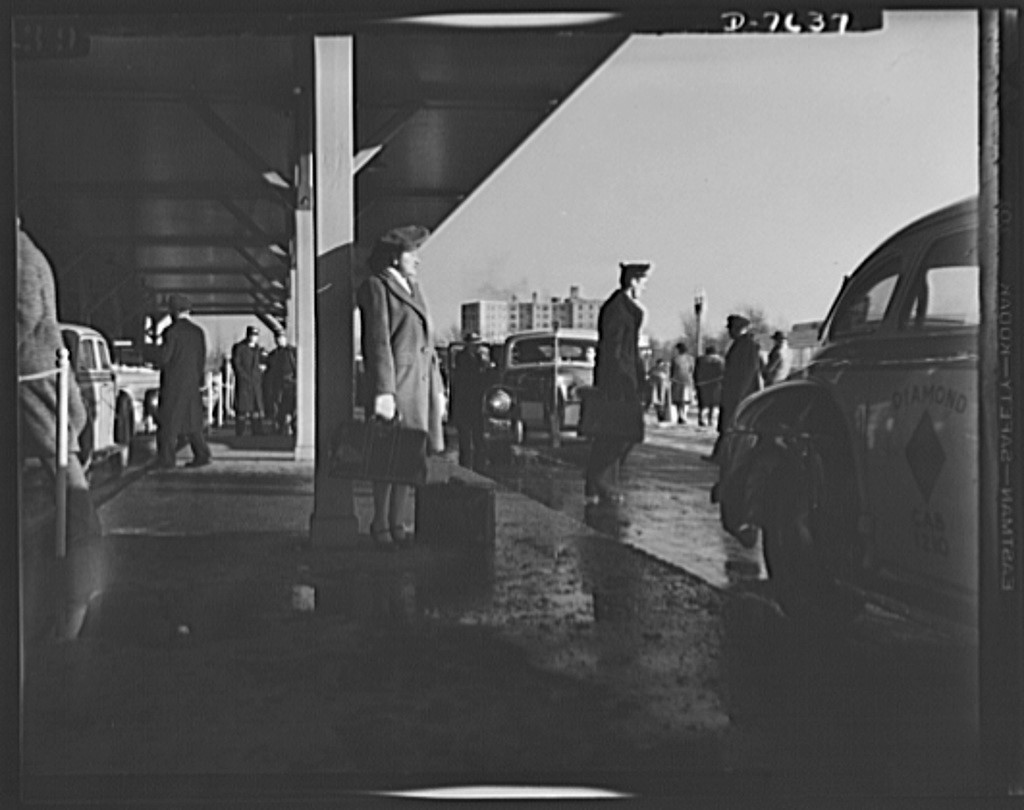
With the signing of Executive Order 8802, African American war workers poured into the capitol and the surrounding area, gaining employment in almost every phase of the war effort, from clerical work in government agencies to jobs in construction and heavy industry. In his capacity as a photographer for the Office of War Information (OWI), it fell to Roger Smith to record the challenges faced by these recent arrivals and the efforts of the government to meet their needs, especially in the crucial areas of housing and transportation. Assigned to the OWI’s “Negro desk,” his task was both to portray African Americans responding to the opportunities presented by the war time economy and to encourage their unqualified support of the war effort. His candid shots of African Americans arriving to the capitol served to do both. On occasion he deliberately shot what were essentially photo essays designed to recruit African American war workers. A series of photographs depicting Clara Camille Carroll on her arrival from Cleveland, Ohio to her employment in a federal agency is perhaps the best example of Smith’s work with such a clear design.
War worker goes to Washington. Typical of the thousands of young Negro women summoned to Washington, D.C. for war work, Miss Clara Camille Carroll of Cleveland, Ohio, arrives at Union Station in the nation’s capital to accept an appointment as clerk in the Mail and File Section of the Ordnance Department of the War Department. It was a cold and dreary morning when Miss Carrol arrived.
Before leaving Cleveland, Ohio, Miss Clara Camille Carroll had heard of the crowded living conditions in the nation’s capital. A friend had written that she could room with her temporarily, so that problem was settled for the moment. Three may be a crowd, but four in a room was too much, so Miss Carrol began to seek new quarters
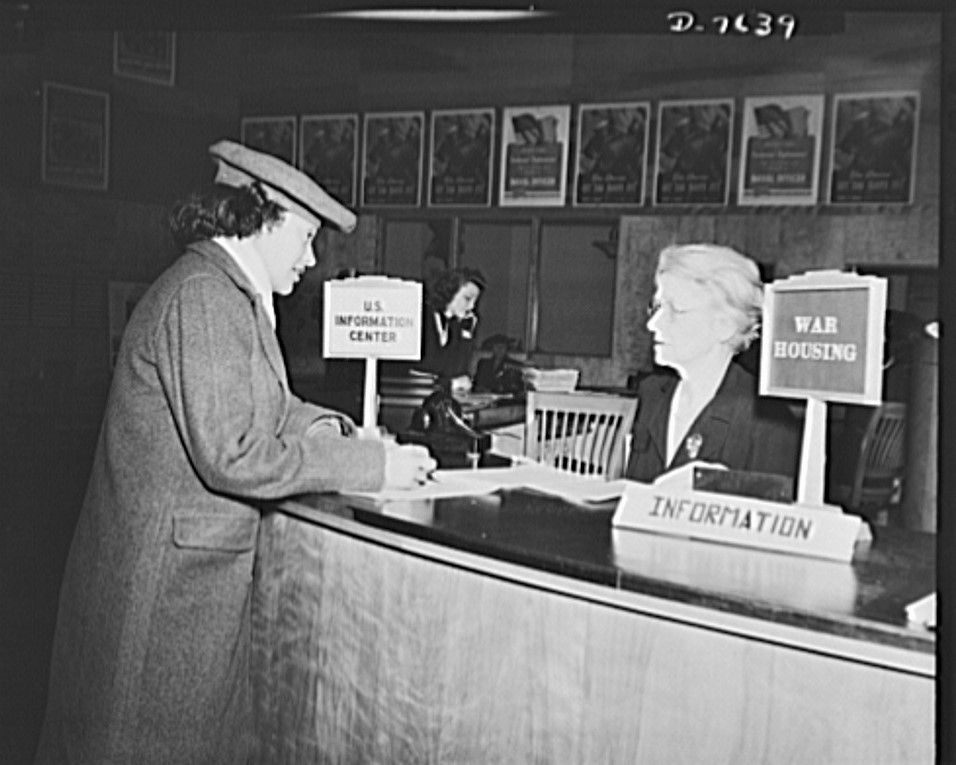
Acting on the advice of the personnel advisor in her section of the War Department, Miss Clara Camille Carroll registers at the War Housing desk at the United States Informational Service, Fourteenth Street and Pennsylvania Avenue, North West. This office was established to aid war workers in obtaining suitable living quarters.
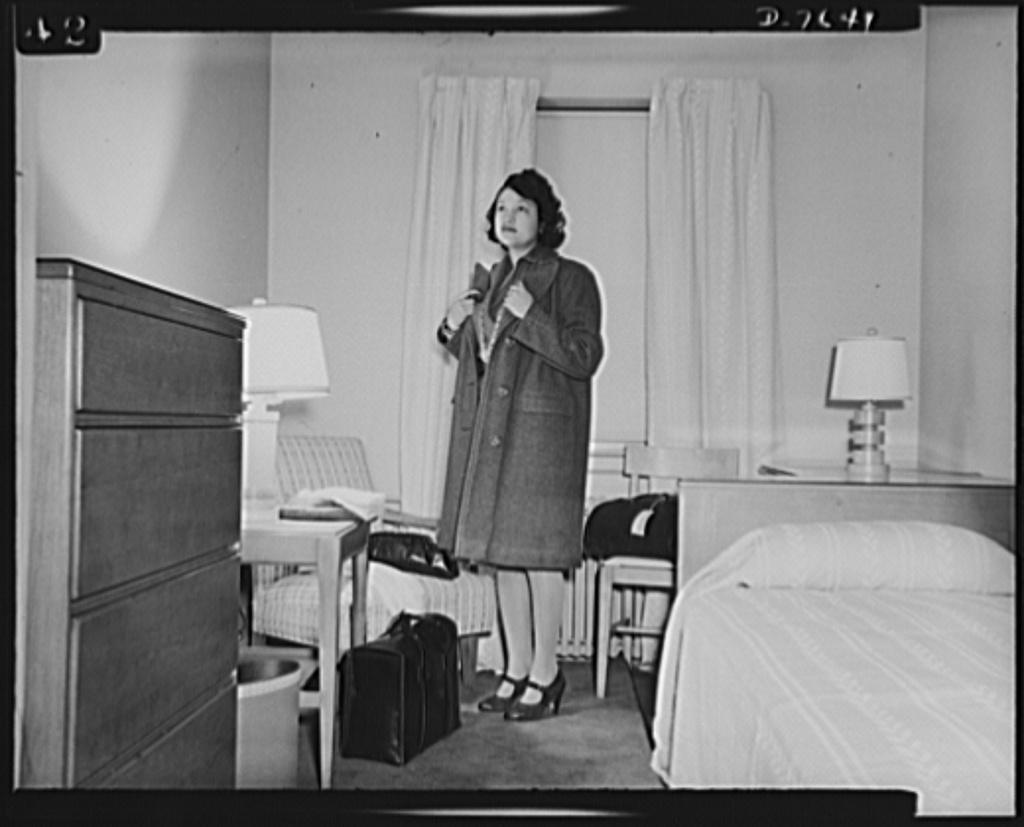
The young war worker, Miss Clara Camille Carroll of Cleveland, Ohio, is elated to find a bright and cheery room open to her at the 760,000 dollar Lucy D. Slowe Resident Hall in the nation’s capital and prepares to move in immediately
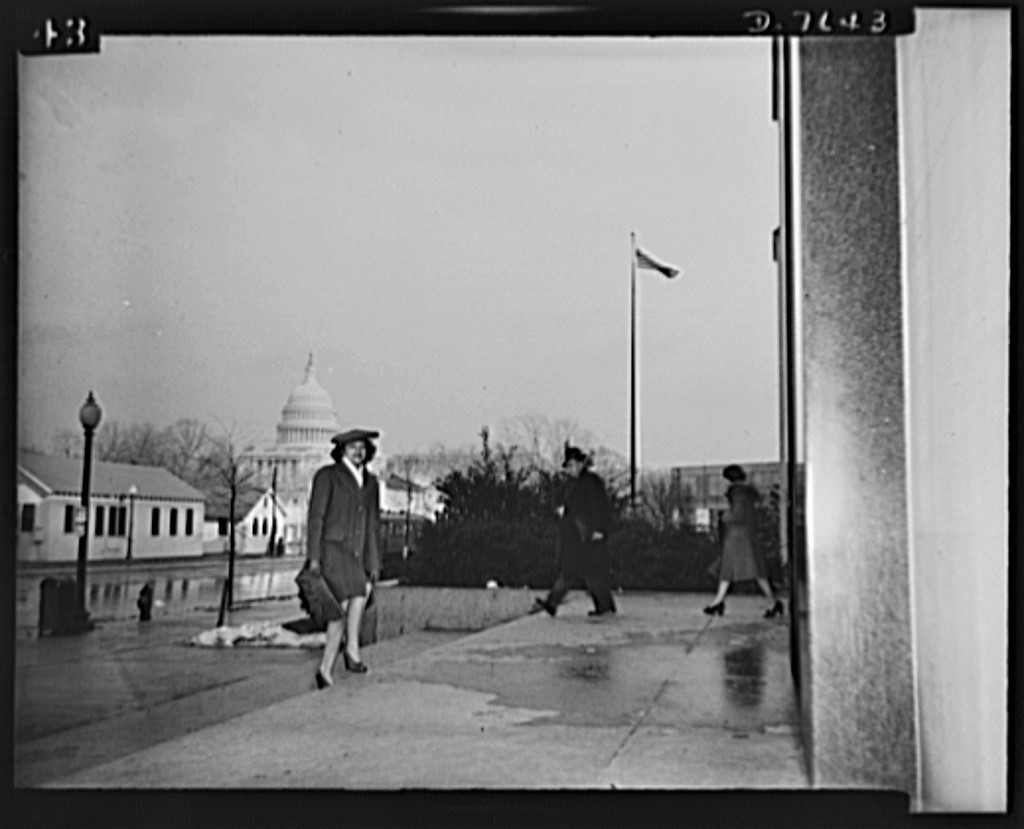
Rested and happier than since she came to Washington, Miss Clara Camille Carroll of Cleveland, Ohio, enters the Social Security Building where her War Department unit was assigned. The Mail and File Section has now been transferred to the Pentagon Building in Arlington, Virginia
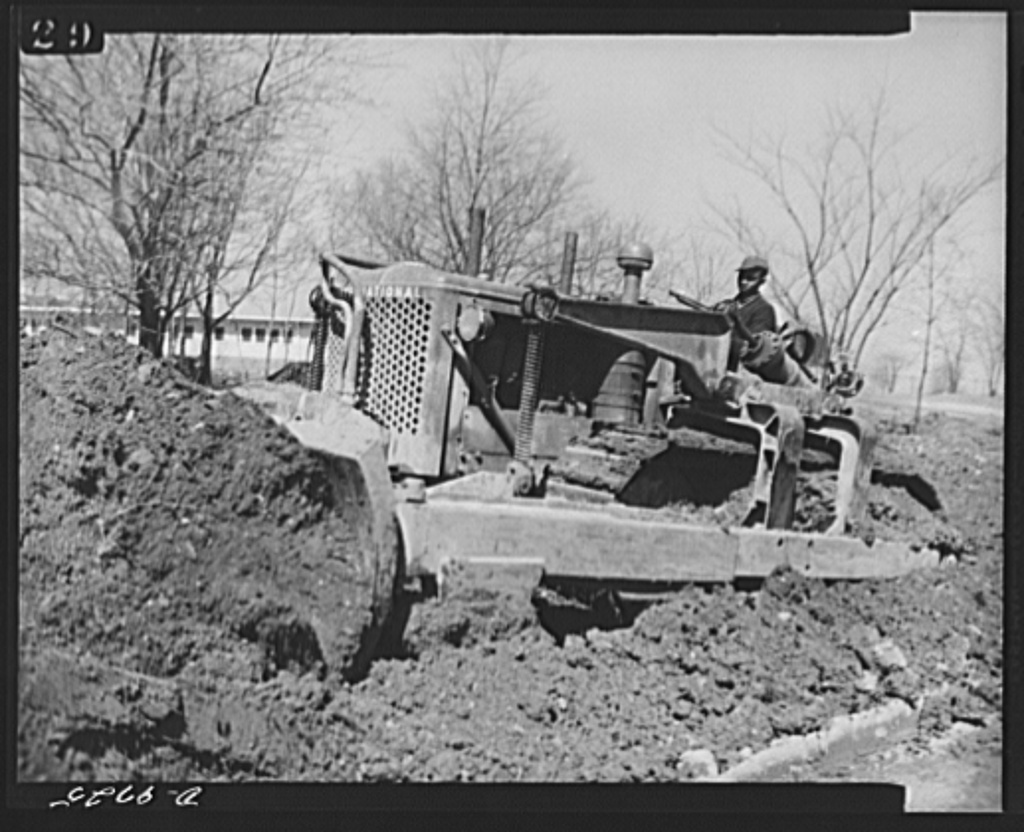
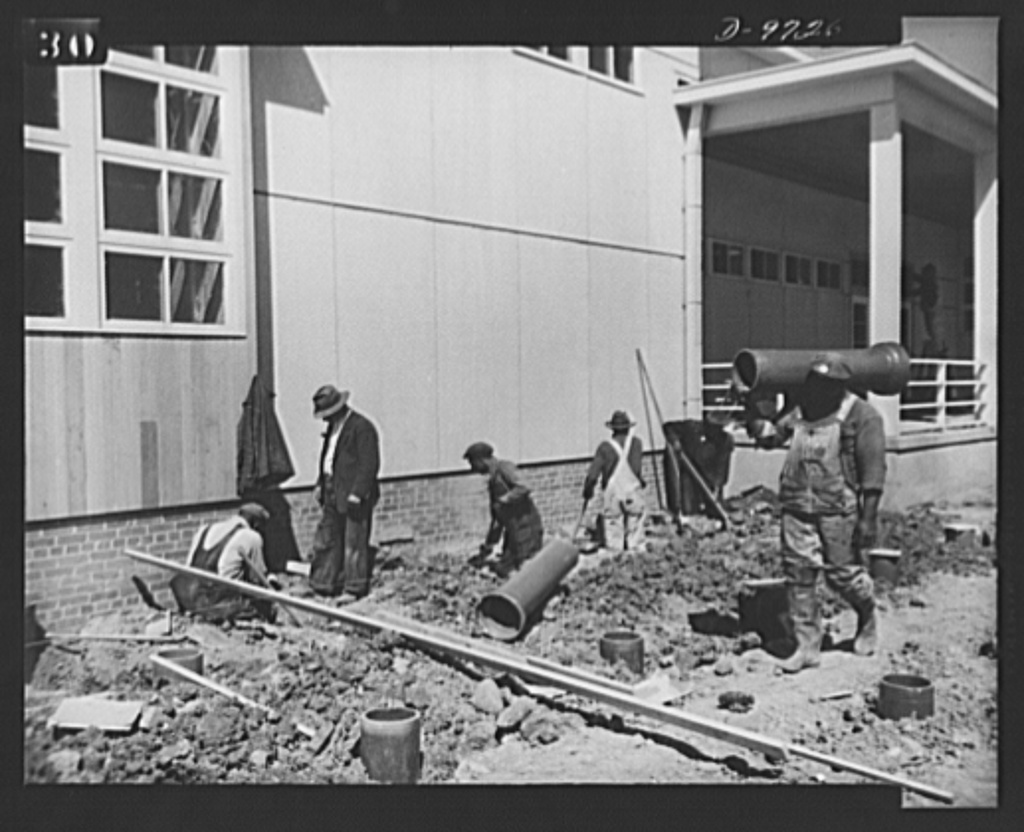
Latest addition to D.C. War Housing Program. Bulldozer grading the grounds of Wake and Midway Halls, now being completed by Samuel Plato, contractor, for 1,000 Negro women war workers in Washington, D.C.
War Housing Program. Mechanics laying pipe at Wake and Midway Halls, latest addition to the housing for war workers in Washington, D.C. The new buildings will house 1,000 Negro women war workers and is being completed by Samuel Plato, contractor
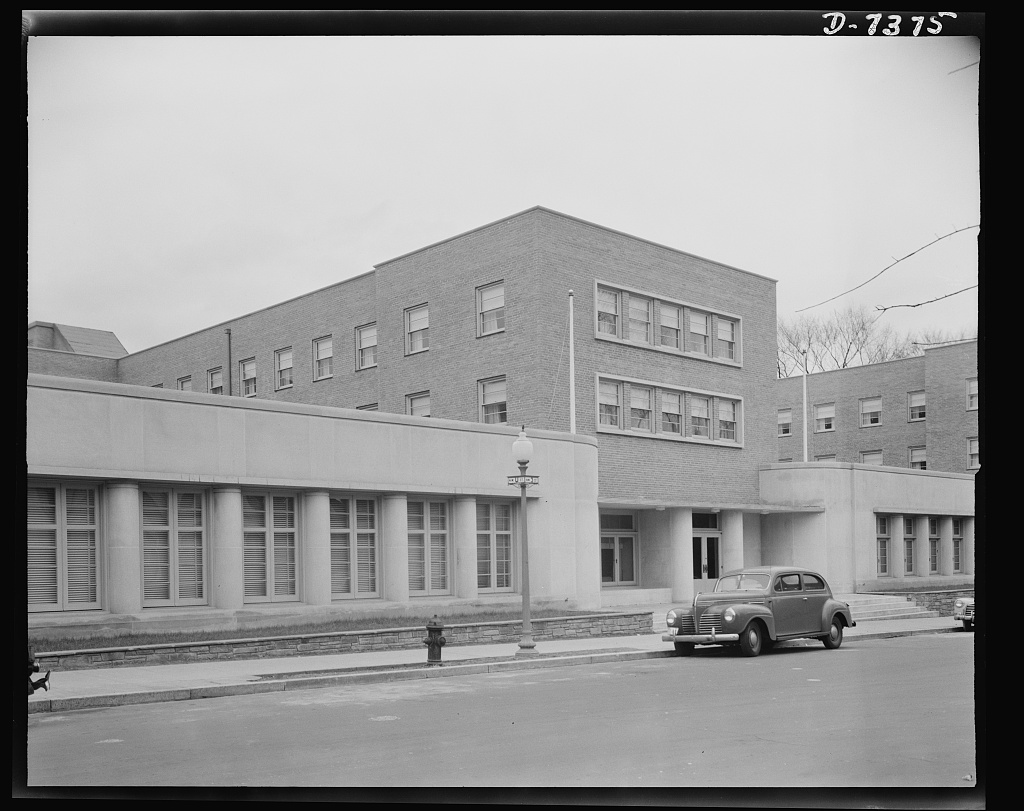
Government hotel for Negro women war workers. The 760,000 dollar Lucy D. Slowe Residence Hall, first government constructed hotel for Negro women workers in Washington, D.C. has been open for occupancy by the Defense Homes Corporation. The three-story brick building has 299 outside rooms and will accommodate 322 women war workers in the Nation’s capital
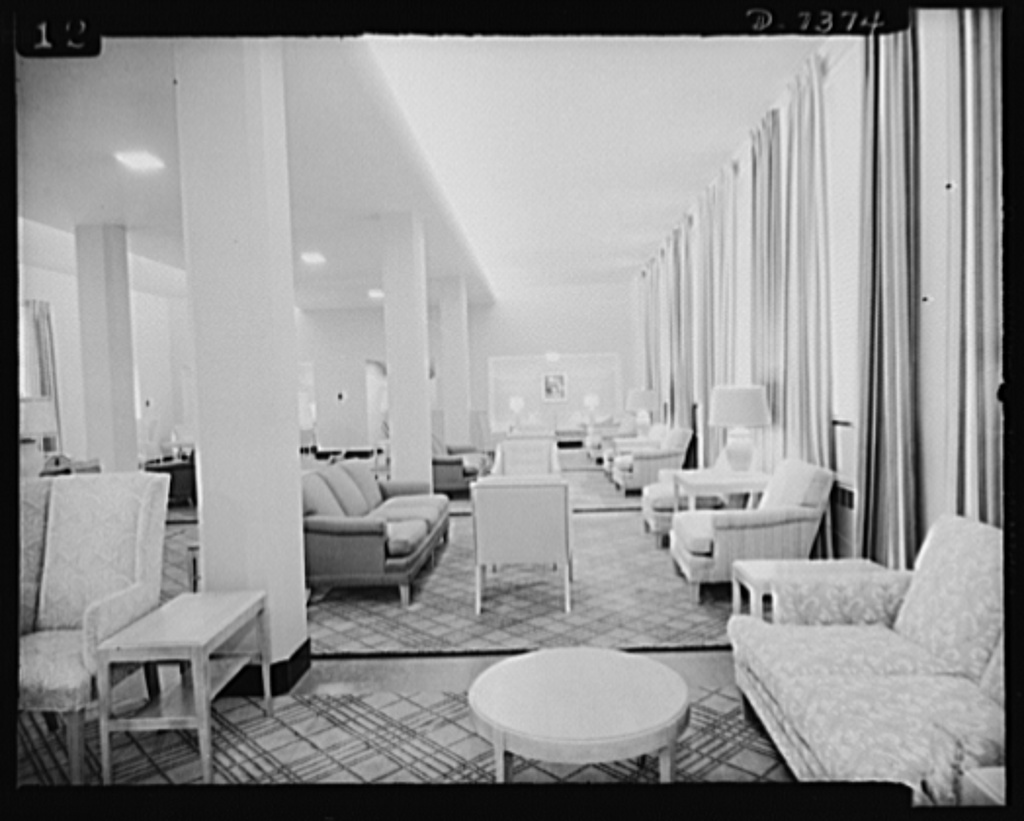
The spacious lounge of the 760,000 dollar Lucy D. Slowe Residence Hall, first government constructed hotel for Negro women war workers in Washington, D.C., is shown above. The 322 residents of the hotel will also enjoy a comfortable lobby, a fountain room for leisure hour snacks, a cafeteria, valet shop and beauty salon
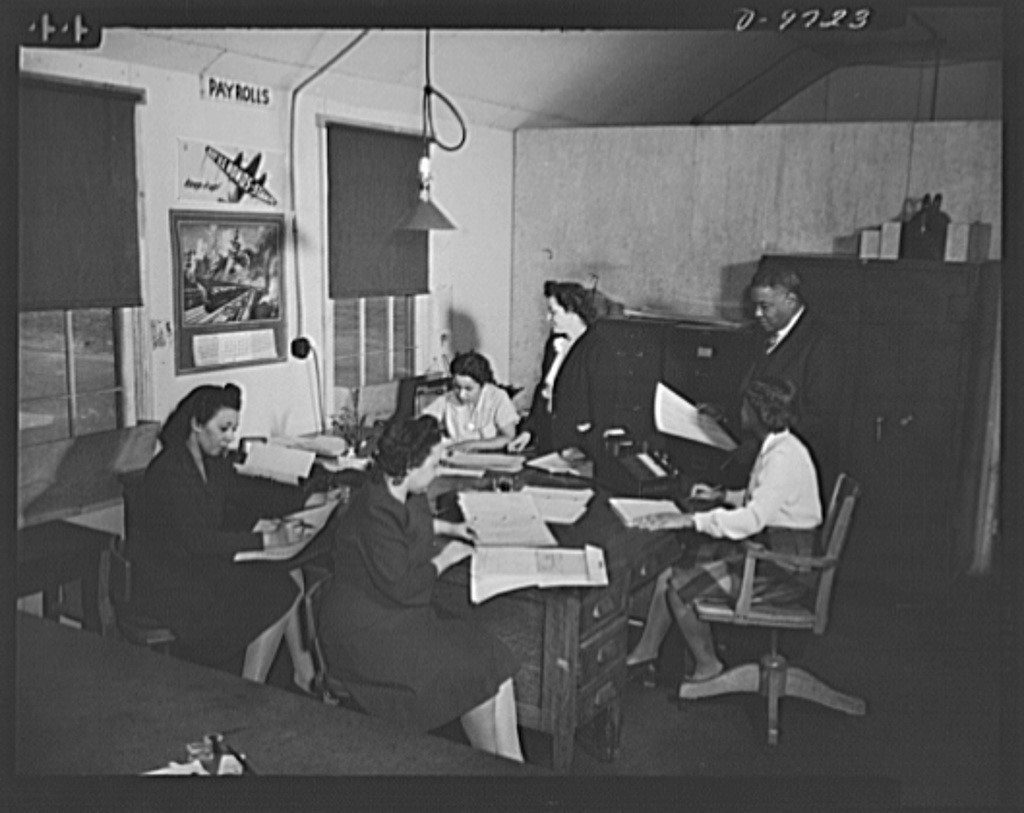
Administrative staff members of the 760,000 dollar Lucy D. Slowe Residence Hall, first government constructed hotel for Negro women war workers in Washington, D.C. are shown in one of the nooks of the spacious lounge of the hotel. Reading to the left (clockwise) Miss Ernestine M. Dupy, Mrs. Marie Wilson, Miss Bernice L. Hawkins, Miss Georgia Williams, Miss Lossie Lewis and Miss Mary H. Dowling
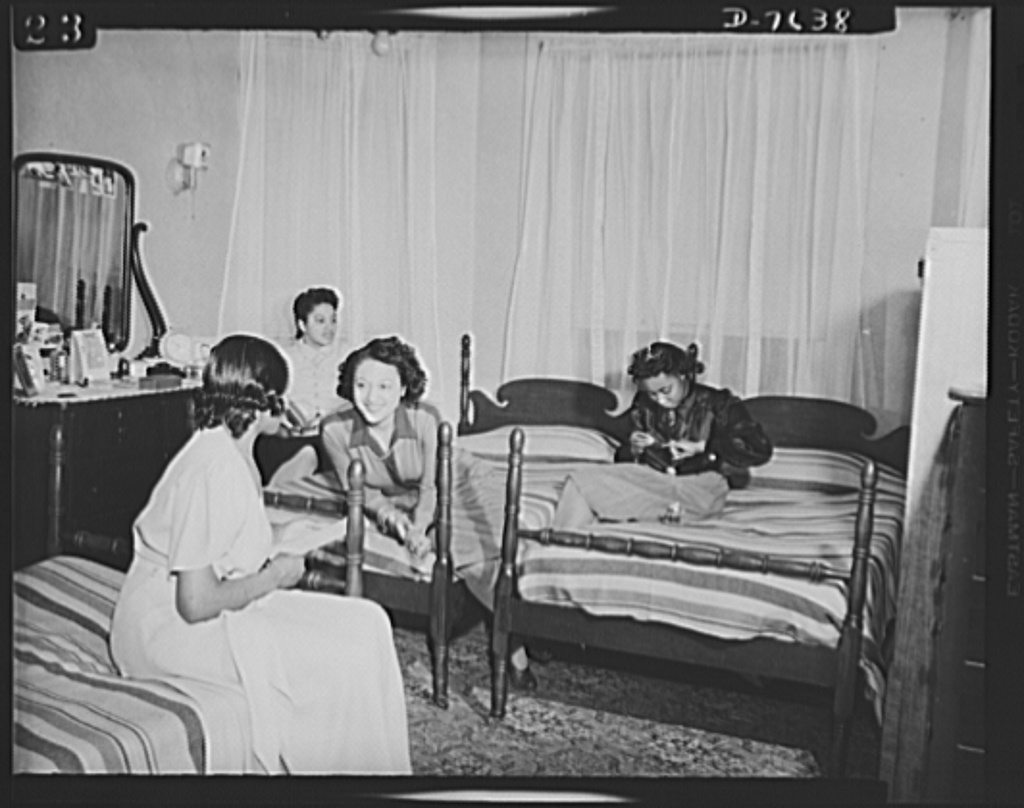
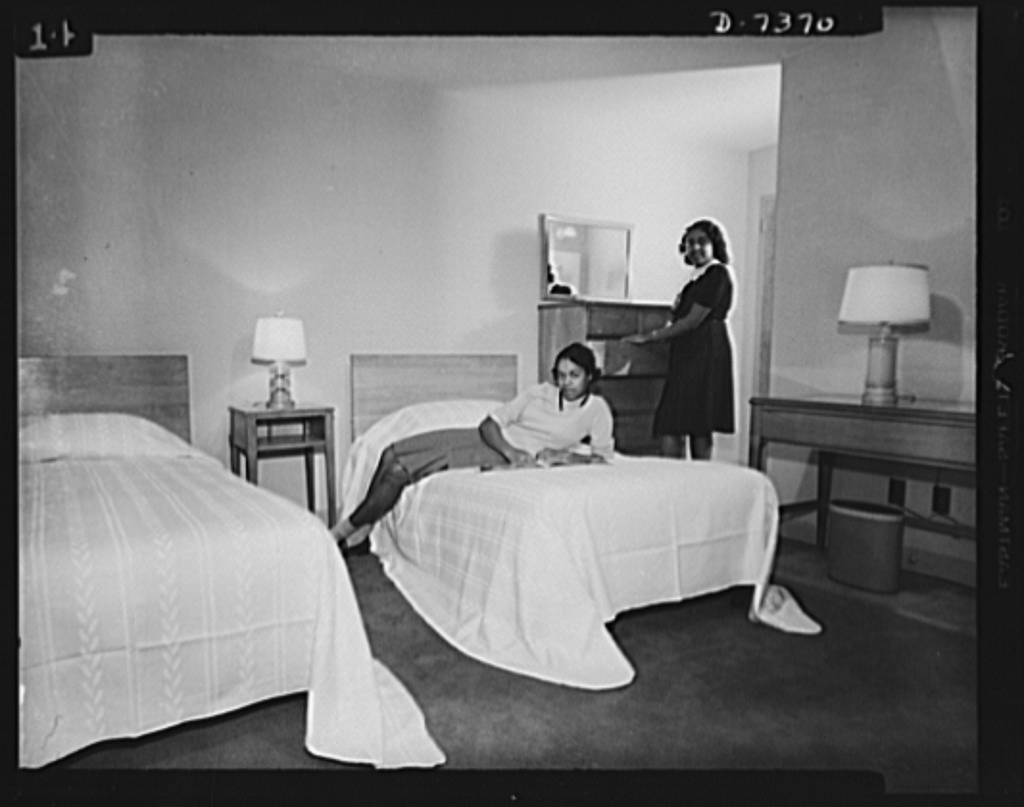
Two girl war workers, Miss Ivy L. Kelsa of Rochester, New York (reclining) and Miss Mercedes A. Brooks of Saint Louis, Missouri, are shown in their double room in the 760,000 dollar Lucy D. Slowe Residence Hall, first government constructed hotel for Negro war workers in Washington, D.C.
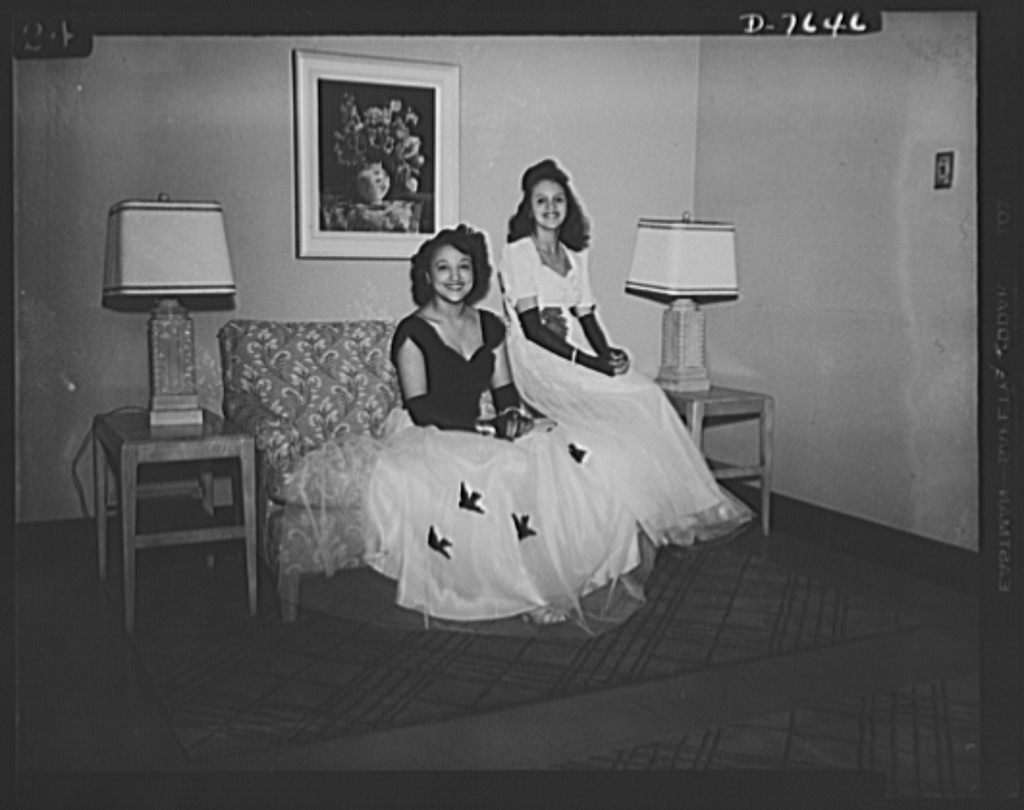
With their co-workers in the War Department, Miss Clara Camille Carroll of Cleveland, Ohio, and Miss Dorothy Burgess of New York City participate in a fashion show at the Lucy D. Slowe Resident Hall so that war workers may get hints on how to make the best buys in clothes based on their salaries.
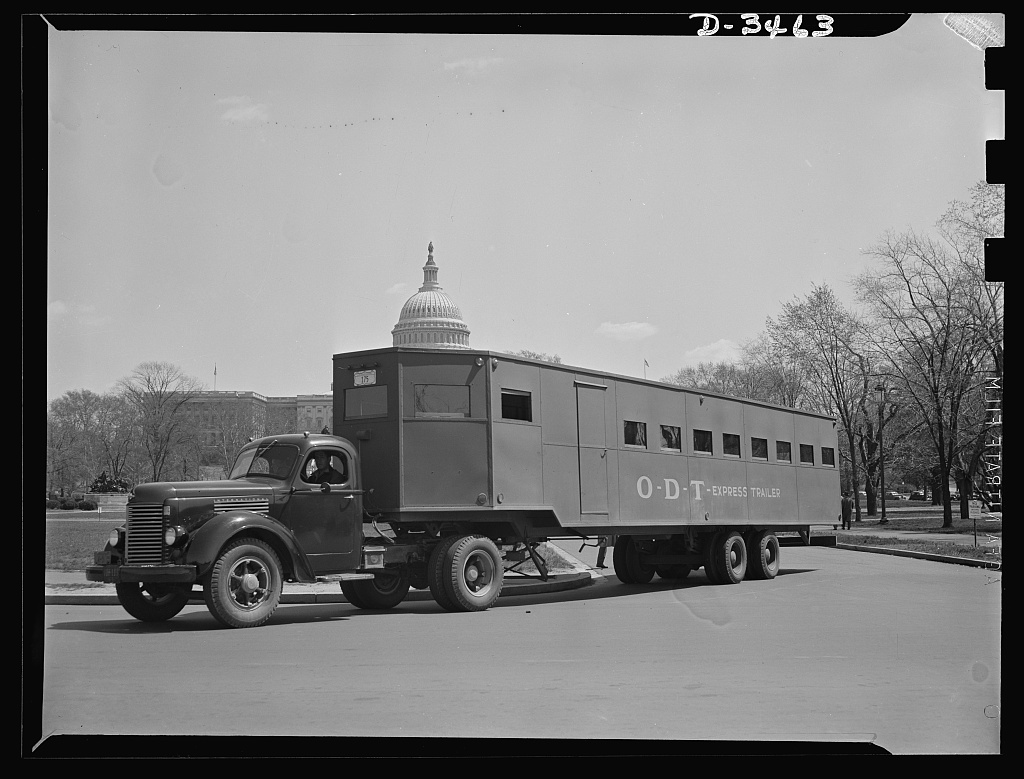
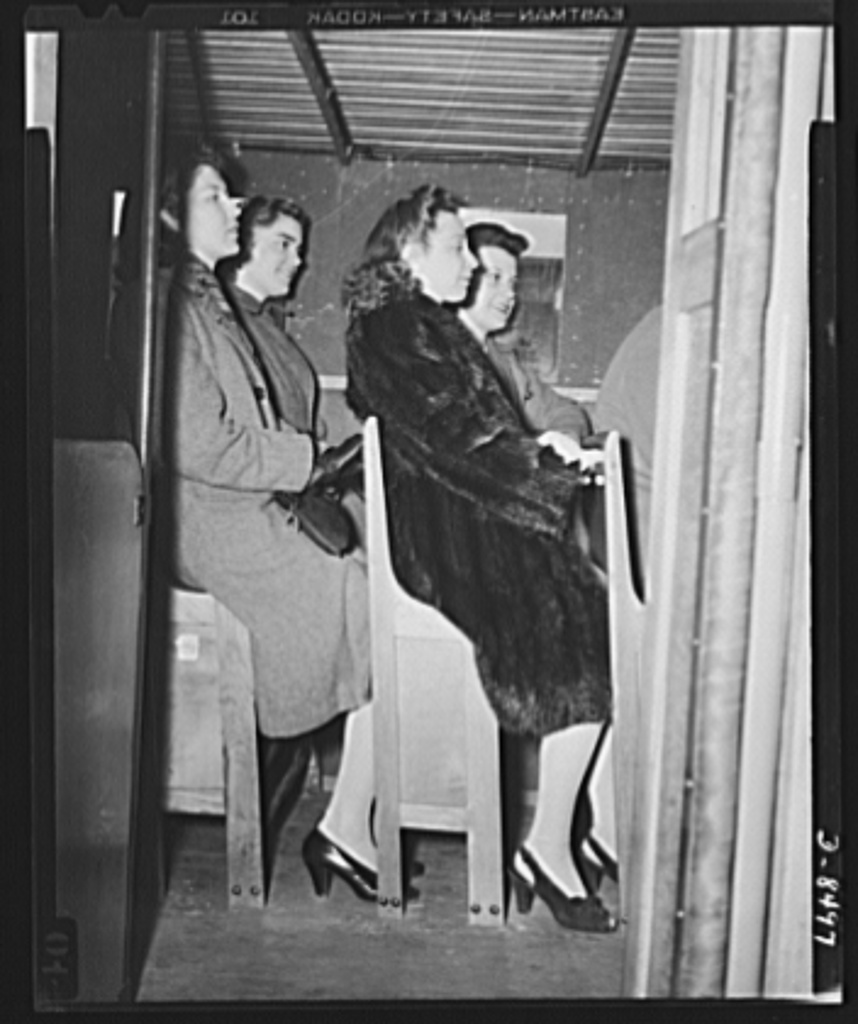
New oversize trailer for war workers. Here’s an answer to the problem of transporting defense workers to outlying industrial plants: It’s the new oversize bus trailer made almost entirely of non-critical materials which held its Washington premier April 13. Hauled by an ordinary one-and-a-half-ton truck tractor, it holds 141 persons, and was designed and built by the Office of Defense Transportation and War Production Board (WPB) officials with the cooperation of private companies. Weight of the trailer is 12,000 pounds as compared with 17,000 pounds for a standard type 40-passenger city bus. The complete unit is fifty-five feet long
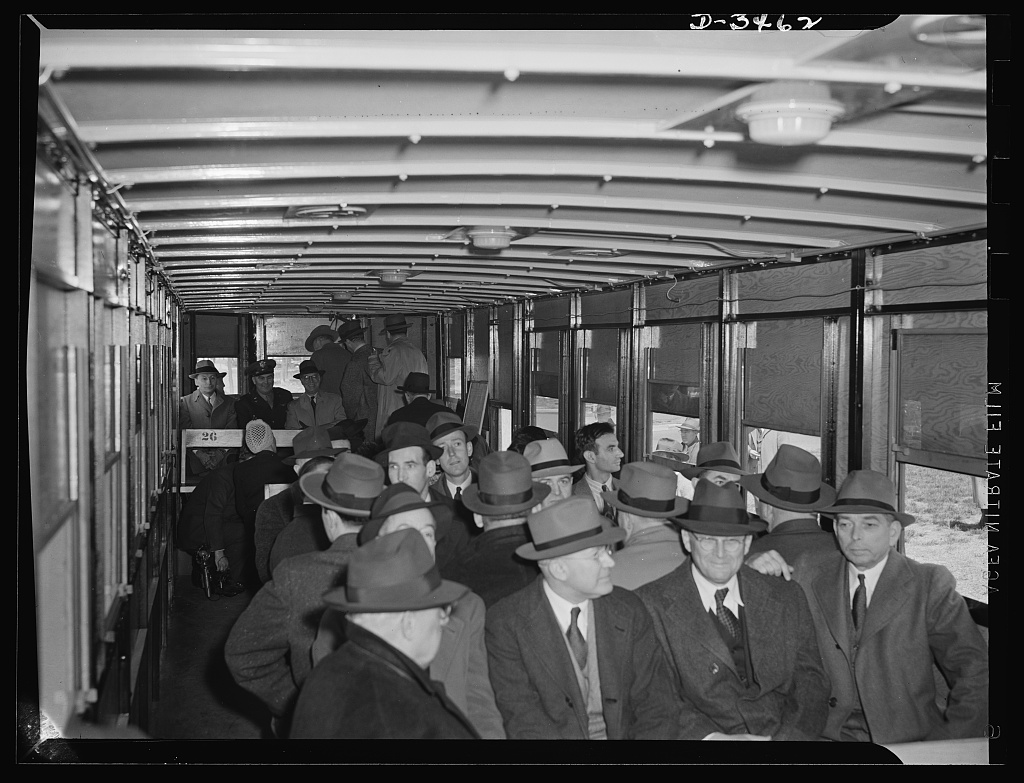
Interior of the new oversize bus trailer, built almost entirely of non-critical material and designed by Office of Defense Transportation and War Production Board (WPB) officials with cooperation of private companies. Containing eighty-seven fixed seats (twenty-four drop seats will be installed later), the trailer has a seating capacity nearly three times that of an ordinary city bus and twice that of the largest type of street car. It’s one solution to the problem of transporting defense workers from cities to outlying industrial plants
It’s better than standing! Government girls accustomed to crowded buses in the nation’s capitol try out the “stand-sit” seat–a space saving feature of the new war wagon trailer.
 Southword